

Erasmus Plus: the essentials
Erasmus Plus, funded by EU member states and other associated countries, is the world’s biggest and best programme for education, training, youth and sport. It provides unparalleled opportunities for young people to travel, learn, volunteer and understand each other’s cultures, across Europe and further afield. And it’s not only for young people: adult education is included too. So forget what you hear or read in the media: Erasmus Plus is not just a “university exchange programme”!
Many people think Erasmus Plus is only about mobility, but in fact it also funds a wide range of other projects and professional partnerships between schools, youth groups, further and higher education institutions, encouraging staff development, exchange of good practice and innovation.
Almost any kind of organisation can apply for Erasmus Plus grants, provided that it is not motivated by profit.
PROGRAMME PRIORITIES
Erasmus Plus explicitly targets and benefits young people with fewer opportunities. The horizontal (high level) priorities of the programme are:
Inclusion and diversity
Digital transformation
Environment and the fight against climate change
Participation in democratic life, common values and civic engagement
All Erasmus Plus funded projects are expected to support at least one of these priorities as well as additional sectoral priorities.
PROGRAMME STRUCTURE
Erasmus Plus funding is allocated to 6 sectors: HE, FE / VET, Schools, Youth, Adult Education and Sport. Within each sector, there are two main types of projects:
MOBILITY PROJECTS (KEY ACTION 1): e.g. youth exchanges, staff training courses, job shadowing, studying abroad etc.
PARTNERSHIPS FOR COOPERATION (KEY ACTION 2): e.g projects which build capacity of organisations and staff, develop new methodologies or materials, or result in other innovations.
Application criteria vary between sectors and types of project. There are also some additional project categories for specific sectors, as well as related programmes and activities outlined below.
With one or two specific exceptions, all projects involve a partnership between organisations in two or more countries. One of the partners is the applicant, with overall responsibility for implementing the project, managing the grant, and final evaluation and reporting.
Important to note:
Erasmus Plus grants are awarded to organisations, and are project-based. There are only a very few types of grant that individuals can apply for directly.
HOW THE FUNDING WORKS
Erasmus Plus funds projects of all sizes, from around €10k to over €1m in some cases.
Grants are calculated differently for each Key Action.
KEY ACTION 1: unit costs for travel (set rates per distance band), daily costs (per participant), organisational support (contribution per participant); plus “inclusion support” or other exceptional costs where justified.
KEY ACTION 2: most projects are funded via block grants (€30k, €60k, €120k, €250k or €400k). The applicant chooses the level of grant required and must justify this in their application.
Funding rates are not generous and it is a general principle of the programme that there should be some degree of co-financing by the applicant or from other sources. Application of this principle varies by type of project.
Important to note:
The programme is mainly administered by National Agencies in each country, ensuring its relevance to national and local policy priorities. The UK’s National Agency is the British Council. Only a small number of specific actions are administered by Brussels.
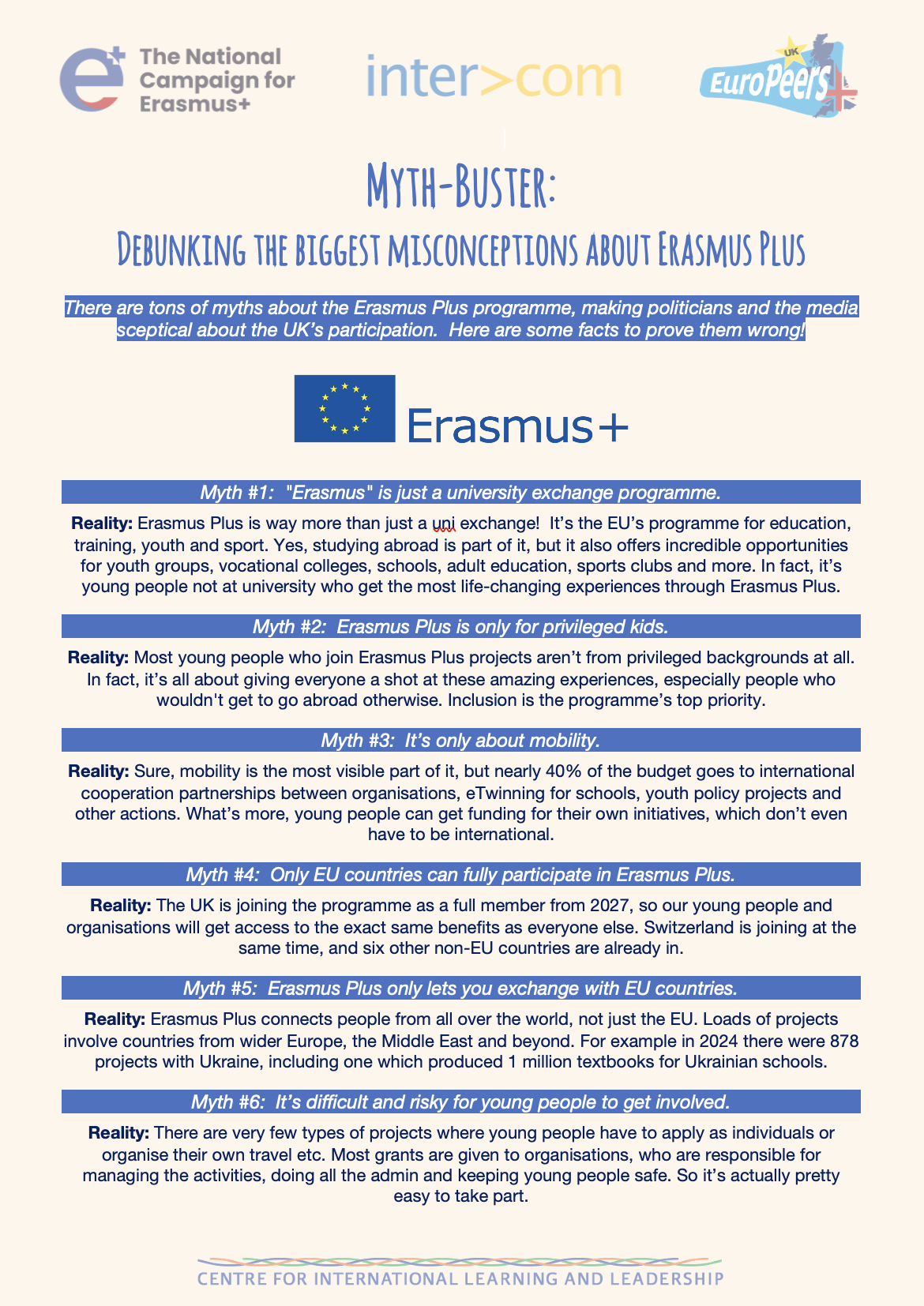
There are still too many misconceptions about Erasmus Plus, especially the belief that it is only a university programme. To fight against this misinformation, we have produced a short “Mythbuster” document (updated June 2026). Download here
RELATED PROGRAMMES AND SERVICES
There are many other educational and youth programmes and activities within, or related to Erasmus Plus.
The European Solidarity Corps provides fully-funded volunteering placements of up to 12 months for young people aged 18-30, as well as funding for small scale youth-led local or international social action projects. ESC is currently a separate EU programme and therefore the UK is not part of it. However, from 2028 it will be incorporated into Erasmus Plus.
eTwinning allows teachers and school staff to collaborate and develop national and international projects. It provides a secure platform for teachers and pupils to work together with schools across Europe, discuss in online groups, follow peer learning and professional development activities.
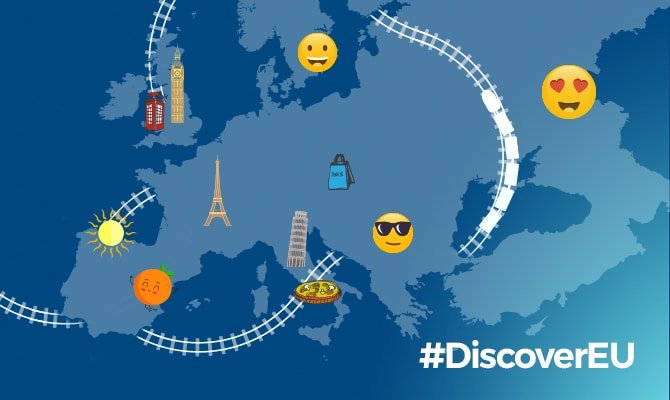
Discover EU gives 18-year-olds free travel on Europe’s railways for trips of up to 3 weeks. Young people apply as individuals or groups, and are responsible for planning their own itinerary and activity programme. Within Erasmus Plus, “Discover EU Inclusion Action” projects offer the same opportunities to young people aged 18-21 with disabilities or other challenges, with the option of travelling with an accompanying adult.
A wide range of partnership-building activities, thematic meetings, training opportunities and resources are available from National Agencies and the SALTO network.
Eurodesk works with over 3000 youth information points in 36 countries that inform young people about mobility opportunities and encourage them to become active citizens. Although Eurodesk was originally a UK (Scottish) initiative, these information services are not yet available again here. InterCom is intended as an independent alternative.
Resources and Links
Visit our Resources page for more detailed background information, or Getting Started to begin your Erasmus Plus project journey.
More from InterCom
We provide additional advice and support to InterCom members. Read more about our services for professionals and young people, or sign up as a member.